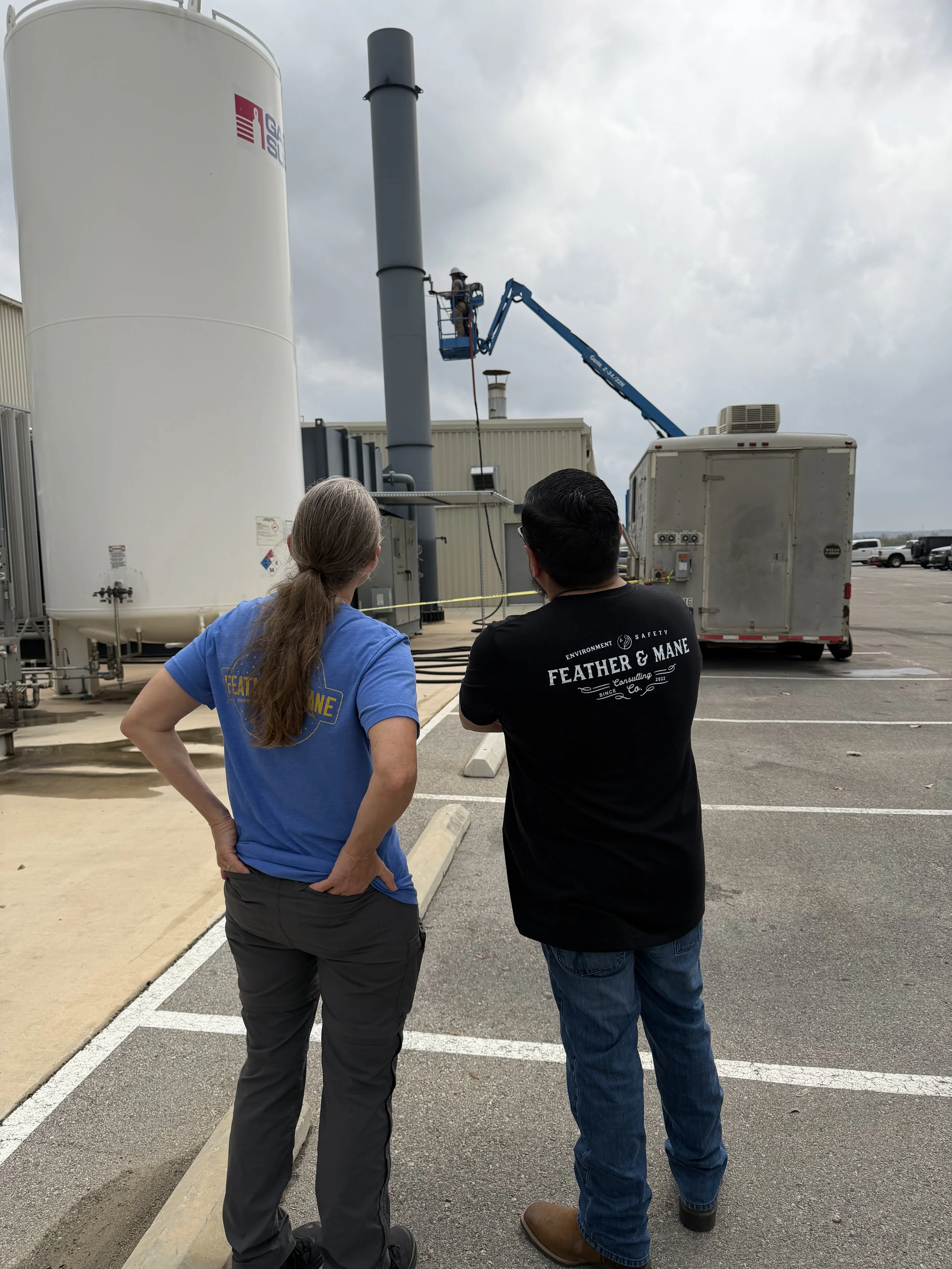
In Texas, you don't start construction or start operations without your air permit
The TCEQ is one of the most stringent regulatory agencies in the country, and the permitting process is complex, technical, and unforgiving.
A missed deadline, incomplete application, or wrong calculations doesn't just slow a project down, it can stop it entirely.
This is why air permitting is its own practice at Feather & Mane. Our team brings decades of specialized experience navigating TCEQ and EPA air quality requirements across a wide range of industries and permit types. We know the regulations, we know the process, and we know how to move your project forward without unnecessary delays. We also partner with trusted stack testing and air dispersion modeling companies to provide full project support from start to finish.
Our Air Permitting Services
From initial application to ongoing compliance, we handle the full scope of Texas air permitting requirements.
De Minimis Facilities that fall below established emission thresholds and do not require registration or authorization prior to construction.
Permit by Rule (PBR) A streamlined authorization for operations that qualify based on emission levels, covering 108 individual PBRs that may be claimed or registered.
Standard Permits For specific, well-characterized classes of facilities where a standard permit fits your operations.
New Source Review (NSR) Case-by-case permit applications for facilities that do not qualify for PBRs or standard permits, including administrative and technical review, public notice, and health impact analysis.
Title V Operating Permits Major source operating permits for large industrial sites, including annual compliance certification, deviation reports, and federally enforceable emission limits.
Greenhouse Gas (GHG) Reporting Annual reporting and compliance under federal requirements.
Point of Use (POU) Reporting Emissions tracking and documentation.
VOC Abatement Permits Volatile organic compound control and permitting.
Ammonia Scrubbers Permitting and compliance support.
Permit Amendments & Renewals Keeping existing permits current as operations change and evolve.
Emissions Inventories Calculating and documenting facility-wide emissions accurately.
TRI Reporting (Toxics Release Inventory) Required annually under EPCRA Section 313, TRI reporting covers facilities that manufacture, process, or use listed toxic chemicals above certain thresholds, including common chemicals like ammonia, toluene, and lead. Reports are due to the EPA every year by July 1. Because TRI air emission data directly informs your permit calculations and emissions inventory, we handle both together to keep your reporting accurate and consistent.
Compliance Assistance Responding to TCEQ notices, requests, and enforcement actions.